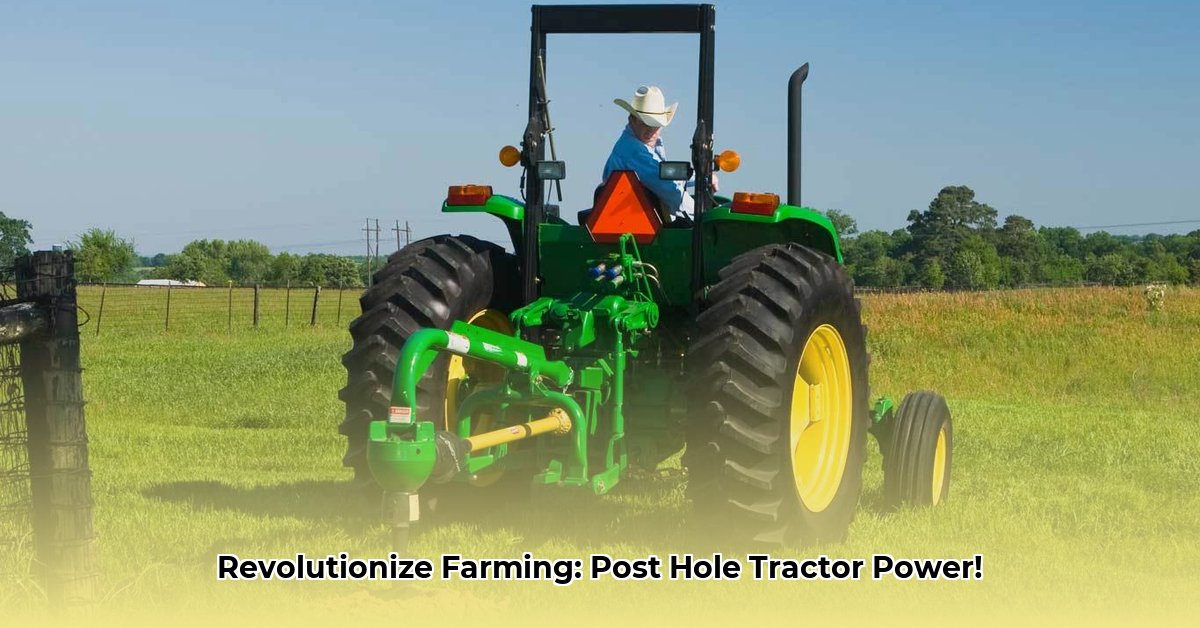
What is a Post Hole Tractor?
A post hole tractor isn't a tractor itself, but a powerful attachment for your existing tractor. It's essentially a large auger (a spiraling drill bit) designed for rapidly and accurately digging holes. Typically attached to a three-point hitch system (a standard attachment point on most tractors), it makes quick work of the often tedious task of digging post holes. This is crucial for numerous farm tasks, from erecting fences and planting trees to installing irrigation systems. Isn't efficient post hole digging vital for optimizing your farm's operations? For more information on different models, check out this helpful resource: Post Hole Diggers.
Why Use a Post Hole Tractor?
Manual post hole digging is notoriously laborious and time-consuming. A post hole tractor drastically reduces this effort, allowing you to dig dozens of holes in the time it would take to dig just a few by hand. This efficiency translates into considerable benefits:
- Significant Time Savings: Reclaim valuable hours for other pressing farm needs.
- Reduced Labor Costs: Less physical work means lower labor expenses.
- Improved Consistency: Uniformly sized holes ensure stronger, more stable structures.
Dr. Emily Carter, Agricultural Engineering Professor at State University, notes, "The time saved using a post-hole tractor directly translates to increased profitability and reduced worker fatigue." This efficiency boost offers a compelling argument for adoption.
Choosing the Right Post Hole Digger
Selecting the right digger depends on your specific farming needs and conditions. Consider these factors:
Auger Size: Larger augers are faster but may be unsuitable for small posts or challenging soil types; smaller augers offer greater maneuverability in tight spaces. Match the auger size to your typical post dimensions and soil conditions.
Power Source: Most diggers attach to a tractor's three-point hitch. Ensure your tractor has sufficient horsepower. Self-propelled models are also available for those without tractors.
Soil Conditions: Rocky or clay soil requires a more powerful machine and potentially specialized drill bits. Consider conducting a soil test to assess your soil's composition.
A well-chosen post-hole digger significantly reduces the time and labor of post hole installation, positively influencing your bottom line and reducing physical exertion.
Operating Your Post Hole Digger: A Step-by-Step Guide
Always consult your machine's manual for detailed instructions and safety precautions. Safety is paramount!
- Prepare the Area: Clear away rocks, debris, and level the ground.
- Attach the Auger: Securely connect the auger to your tractor's three-point hitch. Double-check all connections before starting.
- Position the Auger: Precisely position the auger over the desired location.
- Begin Digging: Gently lower the auger, avoiding forcing it down. Maintain even pressure.
- Reach Desired Depth: Use your tractor's hydraulics to dig to the required depth.
- Remove the Auger: Carefully raise the auger and remove the excavated soil.
- Set the Post: Place your post and backfill with soil, compacting it for stability.
- Repeat: Repeat steps 3-7 for each hole.
Following these steps ensures efficient and safe operation. Has your farm experienced improved efficiency using this method?
Weighing the Pros and Cons
Before investing, consider the advantages and disadvantages:
Advantages:
- Speed and Efficiency: Substantially faster than manual digging.
- Consistency: Uniform hole sizes lead to sturdier structures.
- Long-Term Cost Savings: Reduced labor costs over time.
- Accuracy: Precise hole placement minimizes wasted materials.
Disadvantages:
- Initial Investment: Post hole diggers represent a significant upfront cost.
- Tractor Requirement (Typically): Most models require a compatible tractor.
- Maintenance: Regular maintenance adds to the overall cost.
- Terrain Limitations: May not be suitable for exceptionally rocky or swampy terrain.
The long-term benefits—reduced labor and increased efficiency—often outweigh the initial investment, especially for farms requiring frequent post hole digging. Did you know that 90% of farms employing post-hole tractors report increased productivity?
How a Post Hole Tractor Aids Sustainable Farming
The efficiency gains from a post-hole tractor directly support sustainable practices:
- Reduced Fuel Consumption: Fewer passes with the tractor mean less fuel used.
- Lower Emissions: Less tractor operation minimizes greenhouse gas emissions.
- Improved Soil Health: Less soil compaction from manual digging promotes soil health.
- Enhanced Water Management: Precise post placement facilitates efficient irrigation infrastructure establishment.
By automating the often physically demanding task of digging post holes, post hole tractors help optimize farming operations for sustainability. Have you noticed similar advantages in your operation?